 View All Books on Amazon
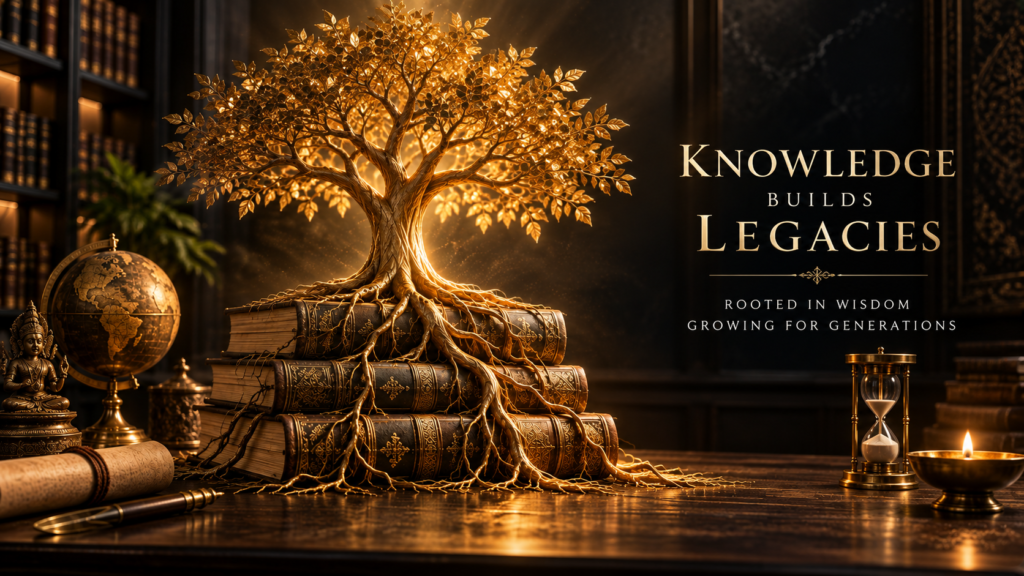
There is a well-known global proverb that exists in almost every culture, often summarized as “shirtsleeves to shirtsleeves in three generations.” The first generation builds the wealth, the second generation maintains it, and the third generation spends it. If your entire strategy for building a family legacy relies on passing down a bank account, your legacy is mathematically likely to disappear within a century.
So, what actually survives? At The Phenomenon Project, we study the communities that have maintained influence, excellence, and resilience not just for a few decades, but for centuries. And what we’ve found is that the most durable legacies are built on an invisible asset: Cultural Capital.
What is Cultural Capital?
Cultural capital is the collective set of intellectual, behavioral, and social assets that a family passes down to its children. It is the internal operating system of your household.
You cannot see it in a bank vault, but it dictates how a family navigates the world. It includes a community’s relationship with delayed gratification, their reverence for education, the way they handle failure, and the daily disciplines they normalize at home.
When a family possesses high cultural capital, financial wealth is simply a byproduct. If a family with immense cultural capital loses all their money in an economic crash, they have the internal tools to rebuild it within a generation. Conversely, if a family with zero cultural capital inherits millions of dollars, they will likely lose it just as fast.
The Mechanics of an Intellectual Legacy
If you want to know how to build a family legacy that can survive political upheaval, economic recessions, and shifting global landscapes, you have to shift your focus from estate planning to mindset planning.
Here is how historically enduring communities construct cultural capital from the ground up:
1. Elevating the Status of the Scholar
In most modern households, children are taught to idolize entertainers, athletes, or billionaire entrepreneurs. In families optimized for a lasting legacy, the hero of the household is the scholar. Parents in these environments go out of their way to show deep respect for teachers, researchers, and thinkers. When children see that intellectual mastery grants the highest social status within their own family, their internal compass shifts. They stop seeking cheap validation and start pursuing deep knowledge.
2. Institutionalizing Curiosity at Home
A true legacy is forged at the dinner table. Enduring families do not treat education as something that only happens at school between 8:00 AM and 3:00 PM. The home is an extension of the classroom. Dinner conversations involve debate, philosophical questions, and critical thinking. Books are visible in every room, treated as essential household infrastructure. Learning is not a chore you do to pass a test; it is the shared hobby of the family.
3. Normalizing Hard Work Over “Genius”
Communities that sustain long-term success rarely rely on raw talent. In fact, relying on “genius” is dangerous because it breeds fragility; the moment a “gifted” child encounters a problem they can’t solve, they shatter. Instead, successful lineages praise effort, discipline, and endurance. They teach their children that struggling with a complex problem is not a sign of stupidity, but the literal feeling of the brain growing. This builds psychological resilience that lasts a lifetime.
A Blueprint from History
If you want to see what cultural capital looks like when executed over hundreds of years, you only need to look at history.
In his groundbreaking book, The Brahmin Phenomenon, Dr. Rahul Kashyap explores this exact dynamic. The Brahmin community in India managed to sustain intellectual and professional continuity across centuries of massive social and political shifts. How did they do it? Not by relying on inherited wealth or military might, but by rigorously enforcing a culture of learning, extreme discipline, and intergenerational knowledge transfer.
Their history proves that the most resilient fortress a family can build is the one constructed inside the minds of its descendants.
Your Legacy Starts Today
You don’t need a massive trust fund to start building a family legacy today. You simply need to change the culture of your home.
Start buying more books. Start praising your children for their focus rather than their grades. Turn off the television and start a debate at the dinner table. Teach your family how to defer their immediate desires for long-term rewards.
Money can be taxed, stolen, or squandered. But a deeply ingrained culture of excellence? That is a legacy that will echo for a thousand years.
Want to uncover the real structural habits of the world’s most resilient communities? Dive into the first book of our series, The Brahmin Phenomenon by Dr. Rahul Kashyap, to explore how disciplined intellectual traditions build lasting influence.
Stay tuned to The Phenomenon Project as we continue to explore the hidden architectures of culture, history, and human success.