 View All Books on Amazon
A Broader Intellectual Vision: Moving Beyond a Single Narrative
When an author publishes a highly anticipated, structurally rigorous book detailing the historical endurance of a specific community, a natural question immediately arises from academics, sociologists, and casual readers alike: “What comes next?” For Dr. Rahul Kashyap, the upcoming March 2026 publication of The Brahmin Phenomenon was never intended to be a standalone, isolated observation. It was merely the crucial, foundational first step in a much larger, highly ambitious intellectual journey.
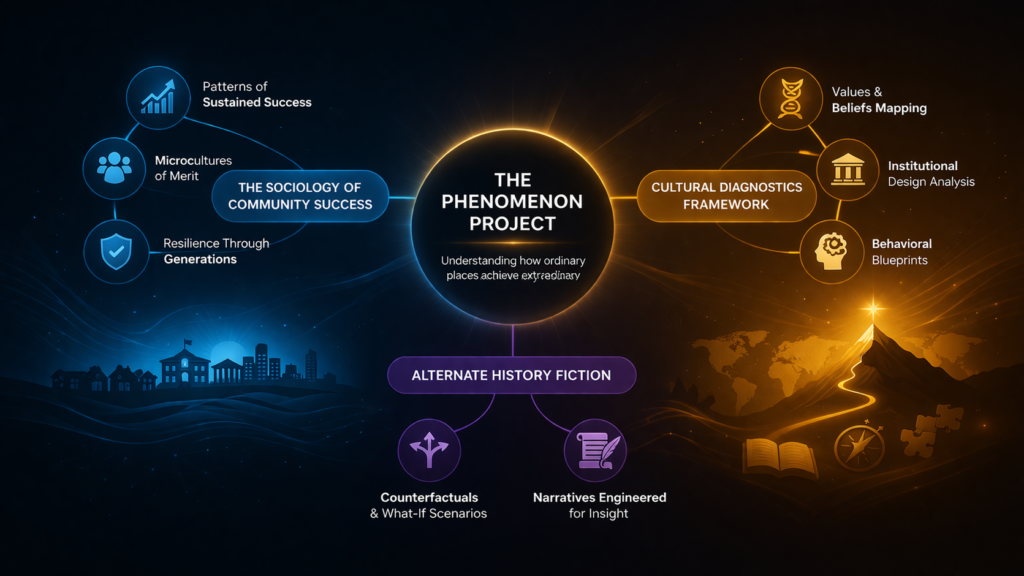
This kind of expansive, multi-disciplinary journey requires a permanent home. It requires a dedicated, continuously evolving platform to explore how culture, educational ideas, and rigorous discipline shape the global influence of diverse communities across multiple generations. This overarching intellectual platform is officially known as The Phenomenon Project Rahul Kashyap has envisioned. It serves as a comprehensive umbrella designed to house non-fiction cultural diagnostics, comparative global sociology, and even speculative historical fiction.
If you have been following our deep dives into the cultural diagnostics framework, you already understand the foundational methodology at play. Today, we are going to pull back the curtain on the macro-vision of this project. We will explore how this exact analytical framework is expanding to study other global communities, decode the mechanics of resilience, and delve into the fascinating, high-stakes speculative fiction currently in development.
The Crisis in Modern Discourse and the Sociology of Community Success
In modern literature, university classrooms, and mainstream media circles, the objective sociology of community success is frequently treated as a taboo subject. Modern discourse often prefers to attribute intergenerational achievement almost entirely to external factors. The popular narrative relies heavily on citing inherited systemic privilege, sheer geographical luck, massive financial inheritance, or random historical accidents as the sole drivers of success.
This popular narrative is not just pessimistic; it is analytically lazy and structurally incomplete. It effectively ignores the highly structured, intentionally designed internal mechanics of the successful communities themselves. When a community repeatedly succeeds across different continents, under different political systems, and through different centuries, we can no longer attribute that success to random luck. There is an engine at work.
The Phenomenon Project was founded to directly and intellectually challenge this reductive narrative. The core mission of the project is strictly diagnostic, universally applicable, and profoundly positive. It operates on the central, data-backed thesis that extreme demographic resilience and sustained, multi-generational success are never random occurrences. They are the highly measurable, predictable outputs of specific behavioral operating systems.
The Intersection of Clinical Medicine and Cultural History
To fully appreciate the vast scope and ambition of this enterprise, we must first understand the unique analytical lens of the mind orchestrating it. Who is the architect behind these diverse non-fiction and speculative projects, and why is this perspective so radically different from traditional sociologists?
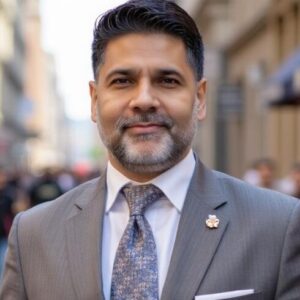
As Dr. Rahul Kashyap author, clinical researcher, and physician will tell you, his primary training is not in political science, critical theory, or classical history. His training was forged in the high-stakes, data-driven world of critical care medicine. Currently serving as a Medical Director at WellSpan Health, he is a highly accomplished physician and an Associate Professor of Medicine. He possesses extensive, real-world experience in diagnosing failing biological systems, managing intensive care units, and implementing large-scale healthcare innovations.
His academic pedigree is staggering. He has authored multiple dense academic textbooks, mentored countless young medical researchers, and published hundreds of rigorously peer-reviewed papers. But beneath his clinical achievements lies a profound, restless intellectual curiosity regarding human behavior on a macro scale.
Dr. Kashyap recognized early in his career that the exact analytical skills he used daily in the intensive care unit could be flawlessly translated to the study of human cultures. In medicine, a doctor must look at a complex, failing biological system, cut through the superficial symptoms (like a fever), and accurately diagnose the root structural cause (like a specific viral pathogen). When applied to history, this same diagnostic rigor strips away the emotional noise of identity politics to reveal the true anatomy of a culture.
Extracting the Behavioral Blueprint of Success
The Phenomenon Project never seeks to demean one group to elevate another, nor does it entertain dangerous, debunked theories of biological determinism. Rather, it seeks to map the specific architectural habits that allow a group to survive massive historical shocks. The ultimate goal of this sociological research is to extract a highly transferable behavioral blueprint of success.
What exactly does this blueprint look like? Across his research, Dr. Kashyap has identified several non-negotiable pillars that form the foundation of durable, intergenerational continuity:
- The Normalization of Delayed Gratification: Successful microcultures actively teach their children that immediate consumption (whether of leisure, entertainment, or money) must be sacrificed for long-term abstract gains (like advanced degrees or business equity).
- Pedagogical Enforcement within the Household: The responsibility of education is never fully outsourced to the state or the school. The domestic environment is meticulously curated to enforce study hours and revere the act of learning.
- The Cultivation of Portable Wealth: Rather than relying solely on physical land or localized political connections (which can be stripped away during migrations or wars), resilient groups invest aggressively in cognitive, intellectual, and highly portable capital.
- Absolute Reverence for Mentorship: A cultural system that demands deep, unquestioning respect for educators, elders, and industry mentors, ensuring a flawless transfer of complex data from one generation to the next.
Readers of the project will be able to clearly see how the underlying mechanics of success are universal and adoptable by anyone. It proves that success is an architecture, not an accident of birth.
Future Non-Fiction: Mapping Microcultures of Merit
Because the diagnostic framework utilized in the inaugural book is universal, it can and must be applied to other extraordinary groups. The long-term vision for the non-fiction wing of The Phenomenon Project involves systematically turning this analytical lens toward other communities that have demonstrated staggering historical endurance.
When evaluating global history, sociologists are presented with several remarkable case studies of what we call microcultures of merit. How do certain tightly-knit mercantile diasporas manage to survive centuries of extreme economic displacement and global migration, only to consistently emerge as some of the most successful, universally respected, and highly entrepreneurial demographics on the planet? How do specific historical academic enclaves maintain their fierce devotion to scholarship and scientific inquiry even when their home nations are subjected to devastating wars or extractive colonial rule?
Future volumes within the project will pivot to analyze different, equally powerful types of cultural capital. While the first book focused heavily on the transfer of abstract scholarly knowledge and linguistic rote memorization, future research will explore how other communities utilize completely different cultural tools—such as intense global trade networking, agricultural innovation, or extreme adaptability in foreign financial markets—to create incredibly durable operating systems.
The Creative Frontier: Alternate History Fiction as a Stress Test
While non-fiction sociology and structural analysis form the absolute bedrock of the project, Dr. Kashyap recognizes that raw data, economic charts, and historical facts have their limits when trying to communicate the extreme fragility of human institutions. Sometimes, to truly understand the absolute boundaries of human culture and psychological endurance, one must step out of the safe realm of historical fact and into the volatile sandbox of speculative narrative.
This is precisely why The Phenomenon Project Rahul Kashyap is formally expanding into the highly engaging, thought-provoking genre of alternate history fiction. By changing a single, massive historical variable, an author can run the ultimate sociological “stress test” on human civilization, allowing readers to explore the dark consequences of historical divergence in a visceral, emotionally resonant way.
The Ultimate Crucible: What if the Axis Powers Won World War II?
The project’s inaugural foray into the realm of fiction tackles one of the most terrifying, intellectually complex “what if” scenarios imaginable: What would the geopolitical, cultural, and sociological landscape look like today if Adolf Hitler and the Axis powers had actually emerged victorious in World War II, resulting in the total defeat, occupation, and brutal subjugation of the United States and the Allied forces?
While this overarching concept has been touched upon in classic mid-century literature (such as Philip K. Dick’s The Man in the High Castle), Dr. Kashyap’s upcoming novel approaches the narrative through the highly specific, analytical lens of a medical and cultural diagnostician. The novel will not just be a standard geopolitical thriller full of military maneuvering and espionage; it will be a profound, deeply human exploration of how rapidly democratic institutions can crumble under authoritarian pressure, and how quickly morality can be legislated out of existence.
More importantly, it will explore the core themes of the broader Phenomenon Project: how do marginalized communities attempt to maintain their internal behavioral blueprints, their educational capital, and their sanity when faced with an omnipotent, totalitarian global regime that actively seeks to erase them? By writing this fiction, Dr. Kashyap is essentially asking his readers: How resilient is the human spirit when the external architecture of freedom is entirely removed, and only internal, intergenerational discipline remains?
This speculative project promises to be a gripping, chilling, and highly philosophical addition to his growing bibliography, proving that the rigorous study of culture is just as profoundly relevant in imagined dystopian futures as it is in documented history. Fiction allows the author to reach an entirely different demographic of readers, bringing the lessons of cultural resilience to a mainstream audience.
Conclusion: Join the Global Intellectual Journey
The platform that Dr. Rahul Kashyap has created is much more than a simple launchpad for a series of upcoming books; it is a vital, ongoing global conversation about the raw mechanics of human potential. It actively challenges us to look past the superficial metrics of modern wealth, grievance politics, and biological determinism, urging us instead to examine the deep, behavioral architectures that truly sustain and elevate our communities.
Whether you are captivated by the historical survival of ancient scholarly traditions, eager to understand the sociological frameworks of modern high-achieving diasporas, or ready to immerse yourself in the terrifying sociological “stress tests” of alternate history fiction, this platform will provide a massive wealth of intellectual capital for years to come.
The journey officially begins in early 2026 with the highly anticipated global release of The Brahmin Phenomenon. We cordially invite sociologists, historians, members of the global diaspora, and avid readers alike to bookmark this site, join our growing community, and prepare to decode the actual mechanics of success.